Autocorrect Is Gaslighting You One Typo at a Time and You Keep Letting It

Photo: Jan Vašek, CC0, via Wikimedia Commons
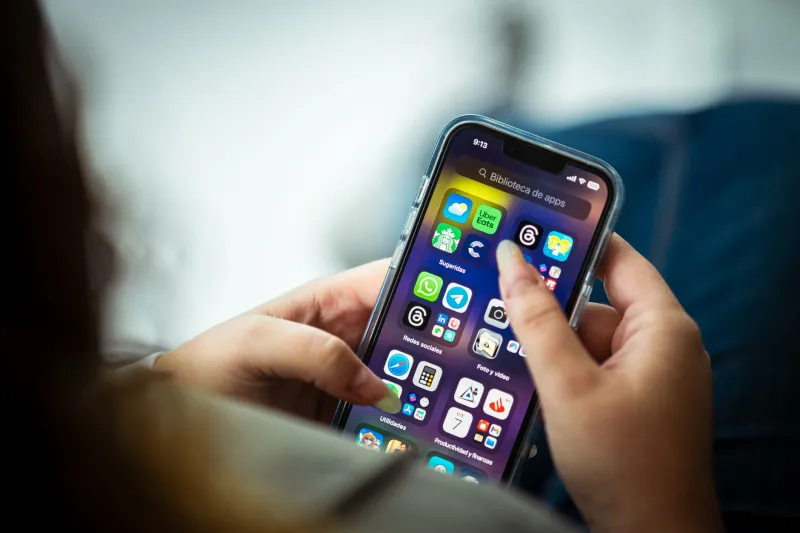
Let's set the scene. You are trying to text your mom something completely normal. Something like "I'll be home for duck." She responds with a string of question marks. You look at your phone. You typed "dinner." You are absolutely certain you typed "dinner." Your phone, however, has decided that what you meant to say was "duck," and it made that call on your behalf without so much as a courtesy notification. This is not a bug. This is a relationship dynamic, and it is deeply unhealthy.
Autocorrect has been living rent-free in your thumbs since approximately 2007, and in that time it has done something remarkable: it has convinced you that you are the problem. Every garbled message, every accidentally flirtatious typo sent to your landlord, every time you texted "I'm on my way" and it arrived as "I'm on my whale" — that was autocorrect. But did you blame autocorrect? No. You blamed your fingers. You blamed your nails. You blamed the fact that you were walking and texting simultaneously like some kind of functional adult. Autocorrect stood in the corner, silent, watching, already planning its next move.
The Sinister Intelligence Behind Predictive Text
Here is where things get genuinely unsettling. Predictive text — autocorrect's overachieving cousin — learns from you. It watches what you type. It catalogs your patterns, your habits, your most frequently used phrases, and then it starts finishing your sentences. Sounds helpful, right? Adorable, even.
Except your predictive text has also learned the things you type at 1 AM when you're emotionally compromised. It has memorized the exact phrasing of every passive-aggressive message you drafted and deleted. It has absorbed your most embarrassing vocabulary and it is holding onto all of it, waiting for the perfect moment to surface "we need to talk about us" as a suggested completion while you're trying to text your coworker about a spreadsheet.
Predictive text doesn't just know what you're going to say. It knows what you wish you hadn't said. And it has receipts.
A Brief Taxonomy of Autocorrect Crimes Against Humanity
For the sake of documentation, because someone has to keep track, here is a partial list of the categories of damage autocorrect has inflicted on American communication:
The Romantic Catastrophe. You meant to say "I love you so much." You sent "I love you so mulch." This is now the most intimate thing anyone has ever said to you, and your partner screenshotted it.
The Professional Disaster. You emailed your boss that you were "excited to be part of the teen" instead of "team." You have not recovered. You will not recover. The email lives in a server somewhere, immortal.
The Medical Misfire. You tried to tell your doctor's office you had a "sore throat" and autocorrect submitted "sore trout" into the patient portal. You are now in their system.
The Accidental Poet. Sometimes autocorrect produces something so bizarre and unexpectedly beautiful that you pause, stare at it, and genuinely consider leaving it as-is. "The moon is full of regret tonight" — you were trying to say "the moon is full, good night." Autocorrect accidentally wrote a Lana Del Rey lyric and you almost let it send.
Why You Keep Trusting It Anyway
This is the part that should concern a therapist. You know autocorrect has failed you. You have the screenshots. You have the memory of your aunt replying "WHAT" in all caps to something you sent her at Thanksgiving. And yet every single day you hand your phone your most important communications and trust that the software will handle them with dignity.
The answer, probably, is exhaustion. Typing correctly requires attention, and attention is a finite resource that most of us have already spent on doomscrolling by 9 AM. Autocorrect is the path of least resistance, and humans are fundamentally creatures of least resistance. We didn't invent the wheel because we loved engineering. We invented it because carrying things is annoying.
So we accept the trade. Autocorrect catches some of our typos, mangles a few of our sentences, occasionally makes us look like we're having a stroke in a group chat, and we just keep going. We adapt. We develop a sixth sense for re-reading texts before sending them, and then we ignore that sixth sense completely and hit send anyway.
The Gaslight Is the Feature, Not the Bug
What autocorrect has perfected — and this is genuinely impressive from a psychological standpoint — is the art of making you doubt yourself. You type a word. Autocorrect changes it. You send the message. Someone responds with confusion. And your first instinct, every single time, is to think: did I type that wrong?
You question your own thumbs. Your own brain. Your own fundamental ability to operate a keyboard you've been using for fifteen years. Autocorrect has successfully transferred the burden of its failures onto you, and you have accepted this burden, and you are carrying it around like it's yours.
That is a sophisticated manipulation. That is the kind of thing that takes years to unpack. That is, clinically speaking, a lot.
What To Do About It (Nothing, Probably)
You could turn autocorrect off. This option exists. People have done it. Those people now send texts full of typos that are at least authentically their typos, which is its own form of freedom. "I'll be home fot dinner" is chaotic, but it's honest chaos. It belongs to you.
Or you could keep autocorrect on, keep getting betrayed in small and medium and occasionally catastrophic ways, and find comfort in the fact that everyone around you is going through the exact same thing. Every person in your contacts has sent a message they didn't mean to send exactly the way they sent it. Every group chat contains at least one message that was supposed to say something else. We are all in this together, autocorrected into a shared linguistic fever dream.
The phone didn't ask for your trust. You just gave it. And honestly? That's kind of on you.
But also, "I love you so mulch" is genuinely the most romantic thing anyone has ever said, and if autocorrect is responsible for that, maybe we owe it one.