Tiny Faces, Big Feelings: The Emoji Glow-Up Nobody Asked For Is Breaking Our Brains
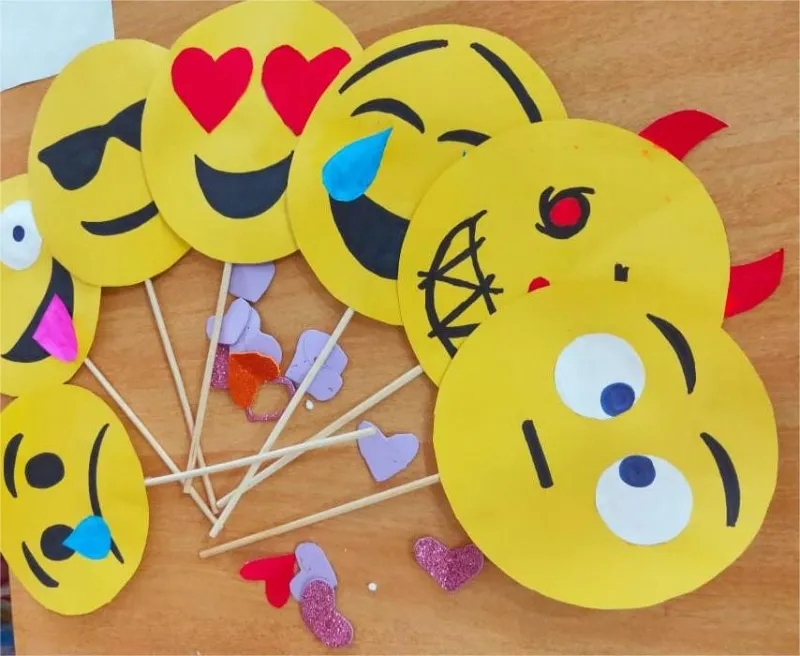
Photo: Jeevitha Madhaiyan, CC BY-SA 4.0, via Wikimedia Commons
Let's establish something important before we go any further: grown adults have cried about emoji. Not metaphorically. Not in the "I'm using crying-laughing face to express mild amusement" way. We're talking genuine, keyboard-smashing, how dare they grief over the fact that a cartoon face got slightly more three-dimensional on their phone update. This is where we are as a civilization. Buckle up.
The Great Blob Genocide of 2017 and Why We Never Recovered
If you want to understand the depth of emoji trauma that lives inside the American internet user, you need to go back to Google's blob emoji era. From roughly 2013 to 2017, Google's emoji were these wonderfully deranged little oval creatures — flat, slightly derpy, deeply charismatic. The grinning blob. The disgusted blob. The blob that looked like it had just witnessed something it could never unsee. They were art.
Then Google decided to "modernize." They rounded everything out, made the faces circular like everyone else's, gave them depth and gradients and tiny little specular highlights like they were trying to sell us a skincare routine. The blobs were gone. In their place: perfectly acceptable, utterly soulless round faces that could have come from any platform, anywhere.
The internet responded with the energy of someone who just found out their childhood home got turned into a Panera Bread. There were petitions. There were tribute posts. Someone made a browser extension to bring the blobs back. We are talking about small ovals that could not speak, feel, or advocate for themselves, and the internet mourned them.
Platform Wars: A Design Philosophy Disguised as a Vibe Check
Here's the thing nobody tells you about emoji: the same Unicode character looks completely different depending on what device you're using. That's not a bug, that's a feature — or at least, that's what the engineers say right before they unleash a new design that makes the skull emoji look like it's applying for a mortgage.
Apple emoji are glossy, hyper-realistic, and designed to look like they belong in a Pixar short. They have pores. Google's current emoji have this friendly, slightly corporate energy, like a mascot for a startup that just got its Series A funding. Microsoft, bless their hearts, went through a phase where their emoji looked like they were rendered on a graphics card from 2003, then overcorrected into something that looks like a very enthusiastic children's book illustration.
And Twitter/X — the platform that once felt like the town square of the internet — has emoji that have gone through so many redesigns that longtime users have developed a kind of design PTSD. You'll see someone post a screenshot from a different platform and genuinely not recognize the emoji they've been using for three years. It's like running into your dentist at a grocery store. Same person. Completely unrecognizable context.
The Science of Why We're Like This (Don't Worry, It's Embarrassing)
Psychologists — real ones, with degrees and everything — have studied why humans form emotional attachments to digital symbols. The short answer is that our brains are absolutely feral and will bond with literally anything given enough repetition. You've sent that crying-laughing face approximately 4,000 times. It lives in your muscle memory. It has meaning to you now. It's practically family.
So when a platform decides to update the design and suddenly your beloved crying-laughing face has different teeth, or the tears fall at a slightly different angle, or — God forbid — it looks happy in a different way than it used to, something in your lizard brain fires off an alarm. Intruder. Not the same. Threat detected.
This is not rational. Nobody is claiming it's rational. But it is extremely, deeply human, which is either comforting or horrifying depending on how much coffee you've had today.
The Cowboy Hat Emoji Incident: A Case Study in Collective Suffering
Few emoji have had a rougher redesign journey than the good ol' smiling cowboy. On some platforms, this guy is charming — a little goofy, wide-brimmed hat, the kind of face that says "howdy" and means it sincerely. On other platforms, at various points in time, this same character has looked like he's planning something. Like he knows where your car is parked. Like he's seen things in the digital frontier that changed him.
The cowboy emoji discourse is a microcosm of everything wrong and right about how we interact with digital design. People on Twitter have written essays about the vibe differences between platform cowboy interpretations. Someone once argued, with genuine intellectual rigor, that the Apple cowboy is optimistic while the Google cowboy is experienced. This is the content our generation is leaving behind. Future historians will study this.
Nostalgia Is the Killer App
At the root of all emoji grief is nostalgia, which is basically the human brain's way of insisting that the past was better while conveniently forgetting all the ways it wasn't. The original emoji set, designed in Japan in the late '90s, was pixelated and primitive by modern standards. But people who grew up texting on those early smartphones remember them with a warmth that's almost parental.
Every redesign is, at some level, a platform telling its users: we think we can do this better. And every wave of backlash is users responding: but we liked the thing we already had. It's the digital equivalent of a restaurant changing its menu. Sure, the new dish might be objectively better. But you wanted the thing you remembered. You had feelings about that thing. The thing meant something.
How to Survive the Next Emoji Apocalypse
First: accept that it's going to happen again. Somewhere in a design lab right now, someone is staring at the current emoji set and thinking about how to make the eggplant emoji more "contemporary." There is nothing you can do about this.
Second: screenshot your favorites. Keep a personal archive. This is not weird. (It is a little weird. Do it anyway.)
Third: remember that your feelings about a 72x72 pixel graphic are valid, human, and also deeply, profoundly absurd. Both things can be true. That's the magic of being a person on the internet in the 21st century.
We are out here forming grief responses to the retirement of cartoon blobs. We are debating the emotional range of a cowboy face. We are writing articles — and reading them — about why a slightly different shade of yellow on a smiley face feels like a personal betrayal.
And honestly? The blobs deserved better. We said what we said.