Swipe, Download, Abandon, Repeat: The Deranged Life Cycle of Every App You've Ever Installed
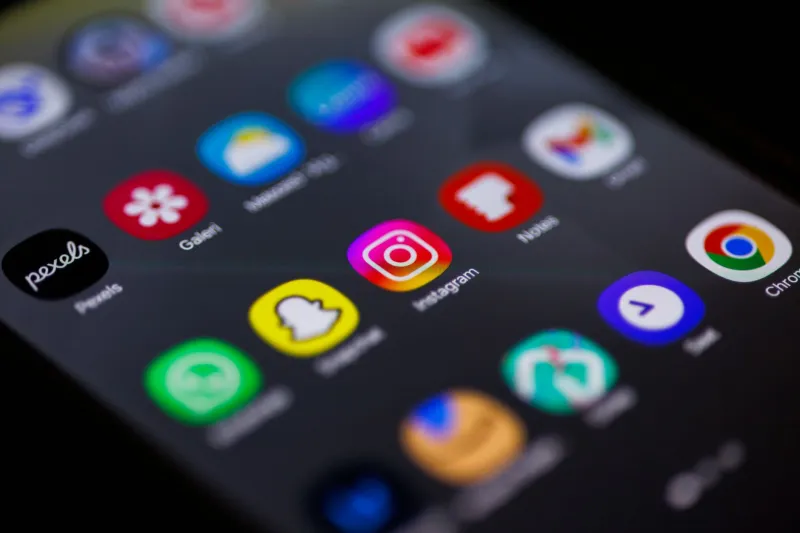
Somewhere on your phone, sandwiched between a flashlight app you downloaded before you realized your phone had a flashlight and a meditation app you opened during one very specific Tuesday panic attack, there lives an entire graveyard of digital ambition. These are your apps. You chose them. You abandoned them. You still haven't deleted them because, honestly, what if you need a barcode scanner someday?
Welcome to the App Lifecycle, a four-act tragedy that plays out millions of times a day across America, starring you, your dopamine receptors, and an App Store that was specifically engineered to make you feel like you're missing out on something revolutionary every forty-five seconds.
Act One: The Download (A Love Story That Lasts Eleven Seconds)
It always starts the same way. You're lying in bed at 11:47 PM, doomscrolling through some thread where someone mentions an app that will completely change how you track your water intake, manage your finances, learn Portuguese, or identify mushrooms in the wild. You don't hike. You haven't been outside recreationally since 2022. None of this matters.
The dopamine hit from tapping 'Get' on the App Store is, neurologically speaking, almost identical to the feeling of accomplishing the thing the app is supposed to help you do. Your brain is not smart enough to know the difference, and frankly, neither is mine. Researchers at the University of Michigan found that the average American has roughly 80 apps installed on their phone at any given time, actively uses about nine of them, and has a complicated emotional relationship with the remaining 71. That last statistic is something I made up, but you felt it in your soul, so it counts.
The download completes. You stare at the icon. You feel like a person who has their life together. You set the app down on your home screen like it's a newborn. You go to sleep.
Act Two: The Opening (One Time, Maybe Two)
The average app is opened for the first time within 24 hours of installation. After that, the numbers get genuinely grim. According to data from app analytics firm Adjust, approximately 25% of apps are used exactly once before being permanently ignored. One in four. A quarter of your entire digital collection is essentially a screenshot of a good intention.
The first launch is always a journey. There's the onboarding screen — those cheerful little illustrated slides that explain what the app does as if you didn't just download it specifically because you knew what it did. Then there's the account creation, the permission requests (this flashlight app would like to access your contacts, microphone, location, and the names of your childhood pets), and finally, the feature that made you download it in the first place, which turns out to require a $12.99 monthly subscription to unlock.
And here's where the real psychological damage begins. Because some of us pay for it. We pay for the app we downloaded at midnight on a whim, hand over our credit card information with the energy of someone who has absolutely done the math on this, and then open the app a grand total of three more times before it takes up permanent residence in a folder called 'Health & Fitness' alongside seven other apps that collectively cost $340 a year and have not made us healthier or fitter in any measurable way.
The Tier List of Delusional Downloads (A Public Service Announcement)
In the interest of journalism, here is an honest ranking of the apps we download with the most spectacular levels of self-deception:
S-Tier Delusion: Language Learning Apps. Duolingo has a 500-day streak system specifically because they know you will quit on day four and feel so guilty about the little owl that you'll come back. You downloaded it because you're going to Italy in 14 months and you want to 'at least know the basics.' You know how to say 'the apple' in Italian. The apple is not going to save you in Florence.
A-Tier Delusion: Budget Tracking Apps. You downloaded this because you spent $400 on DoorDash last month and had what you can only describe as a financial awakening. You manually entered three transactions, got tired, and have not opened it since. The app knows. It's sending you push notifications with the energy of a disappointed parent.
B-Tier Delusion: Workout Apps. Specifically the ones with the 30-day challenges. You are on day two of the 30-day challenge. You have been on day two for six weeks.
C-Tier Delusion: Productivity Apps. You have four different to-do list apps because none of them were quite right. The act of researching and downloading a better organizational system is your organizational system. You are the ouroboros of self-improvement.
D-Tier Delusion: Random Utility Apps. A noise meter. A star map. An app that tells you what dog breed you look like. You used the dog breed one at a party and got 'Basset Hound.' You have not deleted it because the data might be wrong and you need a second opinion.
Act Three: The Purgatory (The Folder of Shame)
At some point, your phone hits a storage wall. iOS sends you a notification. Android gives you that little warning. And you are forced to confront the folder — the one with the ambiguous emoji as its name, containing 34 apps organized by absolutely no discernible logic, representing approximately $180 in impulse purchases and four distinct personality phases you've cycled through since 2020.
This is the purgatory stage. You know these apps aren't serving you. You cannot bring yourself to delete them. The cooking app with 2,000 saved recipes you have cooked zero of. The journaling app where you wrote two entries about wanting to 'be more present.' The game you downloaded because a meme made it look fun and which turns out to be a slot machine wearing a puzzle's clothing.
They sit there. Waiting. Occasionally sending notifications you dismiss without reading, like texts from an ex you're too polite to block.
Act Four: The Deletion (It's Not Murder, But It Feels Like It)
Eventually, you do it. You hold down the icon until everything starts shaking — a visual metaphor for your phone having a small breakdown — and you tap the minus sign. The app asks if you're sure. Are you sure? It wants to know. It has feelings about this.
And here's the thing nobody talks about: there is a weird, specific guilt that comes with deleting an app you paid for. A $4.99 purchase from 2021 that you used twice should not inspire the emotional complexity of a breakup, and yet. You tap 'Delete App' with the energy of someone doing something irreversible. You briefly wonder if you'll regret it. You will not regret it. You regret nothing. You feel free.
For approximately 72 hours, after which you will see another thread recommending an app that will completely change how you track your sleep, your macros, your mood, your steps, your screen time, and your relationship with the concept of self-improvement.
The App Store is open. The little icon is right there.
You already know how this ends.
UnsiZeros does not endorse the downloading of any additional apps. We are, however, legally required to disclose that three members of our editorial team are currently on day two of a 30-day fitness challenge.


