Congratulations, Your Phone Just Had Another Mental Breakdown and Wants You to Know About It
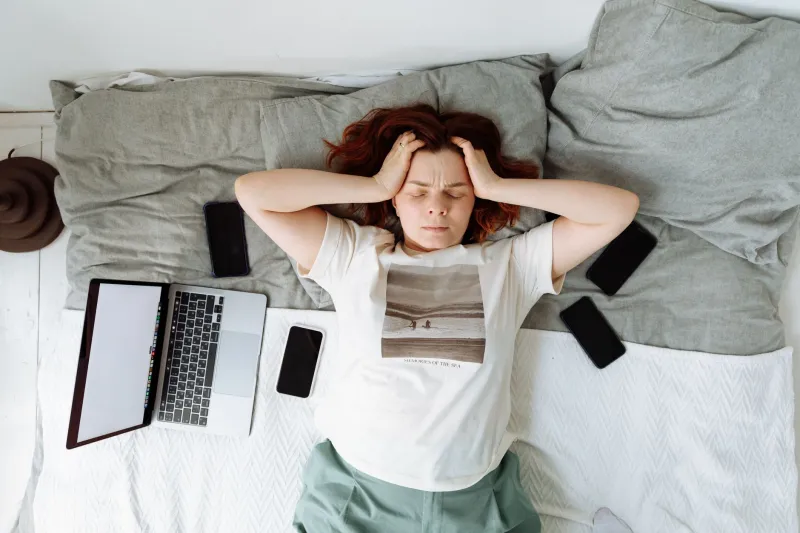
Somewhere between 2012 and now, your phone transformed from a handy communication device into a needy, sleep-depriving, attention-gobbling gremlin that simply cannot tolerate being ignored for eleven consecutive minutes. It buzzes. It chirps. It flashes little red badges like a tiny digital rash that spreads overnight. And you — exhausted, twitching, conditioned like a Pavlovian lab rat with a cracked screen — keep looking.
Welcome to the notification economy, where your attention is the product and the checkout line never closes.
The Moment Everything Went Sideways
There was a specific, identifiable moment in smartphone history when engineers looked at the humble notification — originally designed to tell you someone called — and thought, what if we used this power for chaos? That moment was approximately whenever some growth-hacking product manager realized that re-engagement notifications could juice daily active user metrics without anyone having to, you know, make the app actually good.
Now your weather app wants to tell you it might be cloudy on Thursday. Your grocery delivery service needs you to know your shopper has started shopping. A game you downloaded in 2021 and haven't opened since the Biden administration is deeply concerned that your village is "lonely." LinkedIn — bless its chaotic heart — has informed you that someone you met at a conference in Denver eight years ago just celebrated a work anniversary, and apparently this is news.
These are not notifications. These are distress signals from apps that have confused your attention with affection.
A Completely Serious Ranking of the Most Pointless Notification Categories
Tier F: The "We Miss You" Guilt Trip Apps you forgot you had, sending you passive-aggressive pings about your absence. "It's been 14 days since you last opened Duolingo. Your streak is gone. Are you okay?" No, Duo. None of us are okay. That's why we downloaded a language app and immediately abandoned it.
Tier F: The Progress Update Nobody Requested Your food delivery app has mastered the art of narrating your burrito's entire biography in real time. "Your order has been confirmed." "Your order is being prepared." "Your driver is 12 minutes away." "Your driver is 8 minutes away." "Your driver has arrived." At some point, the app will probably notify you that you have finished eating and ask how it felt.
Tier D: The Ambient Anxiety Generator Stock apps. News apps. Anything that monitors a number and has decided that a 0.3% fluctuation in something constitutes breaking news requiring immediate interruption of your life. These notifications don't inform you. They just quietly corrode your nervous system like rust on a mailbox.
Tier C (Chaotic Evil): The Social Proof Notification "Someone you don't follow liked a post from someone you barely follow." Instagram pioneered this genre of absolutely fictional urgency and the entire industry followed. These exist for one reason: to make you open the app. There is no other reason. Do not look for one.
The Psychology of the Buzz (Or: How They Got Inside Your Brain)
Here's the genuinely unsettling part. App developers didn't accidentally stumble into this level of psychological effectiveness. Notification timing, phrasing, and frequency have been A/B tested within an inch of their lives. There are entire teams of smart, talented people whose job is to figure out the exact wording that makes you feel like something important is happening when it absolutely is not.
The little red badge? Deliberately borrowed from the visual language of urgency — think red traffic lights, warning labels, emergency alerts. Your brain is hardwired to treat red as a signal requiring response. App designers know this. They have always known this. The badge is not informational. It is a leash.
The vibration pattern? Also not random. The unpredictability of when a notification arrives is part of the mechanism — variable reward schedules, the same psychological architecture that makes slot machines so effective. You don't check your phone because you know something important arrived. You check it because you might have, and the uncertainty is unbearable.
You have been gamed, and the game is very, very good.
The Great Purge: A Survivor's Guide to Notification Detox
So you've decided to take back your attention span. Noble. Delusional. But noble. Here's what actually works, delivered with the grim pragmatism this topic deserves.
Step One: Go to Settings and Feel the Horror Open your notification settings for the first time in years. Scroll. Keep scrolling. Notice that 73 apps have full notification privileges and you gave most of them permission during a three-second onboarding screen while you were trying to get to the actual app. This is the reckoning.
Step Two: Apply the Funeral Test For each app, ask yourself: if I were at a funeral, would I be okay if this notification interrupted the eulogy? If the answer is no — and for Candy Crush it is absolutely no — revoke its privileges immediately.
Step Three: Embrace the Scheduled Check Instead of responding to every buzz like a startled golden retriever, designate two or three times a day to actually look at your phone intentionally. This feels insane at first. It feels like leaving money on the table. That feeling is the withdrawal. Push through it.
Step Four: Fake Your Digital Death (The Nuclear Option) Turn on Do Not Disturb. Tell no one. Let the apps wonder where you went. There is a specific, deeply satisfying peace that comes from knowing your phone is absolutely losing its mind with undelivered pings while you eat dinner like a person who existed before 2007.
The Part Where We Admit Nothing Will Change
Here's the honest conclusion, delivered with love: you will read this article, feel a brief surge of righteous clarity, turn off three notifications, and then re-enable them within 48 hours because an app guilted you into it or because you were afraid you'd miss something. This is fine. This is the human condition, circa right now.
The notification industrial complex is very powerful and very well-funded and it has spent years learning exactly how your brain works. You are not weak for struggling against it. You are just a person with a nervous system trying to exist in an environment that was specifically engineered to exploit it.
At least your village in that game isn't lonely anymore. Probably. You should check. There might be a notification about it.