Red Dot Fever: The Psychological Hostage Situation Living in Your Status Bar
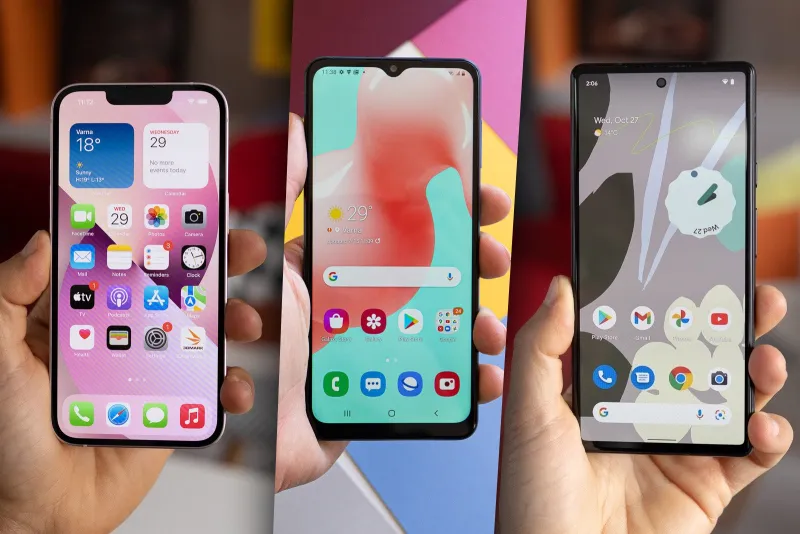
Photo: smartphone notification badges red icons overwhelming screen close up, via m-cdn.phonearena.com
Somewhere between your third cup of coffee and your fourth existential spiral this morning, you tapped your email app. Not because you were expecting anything important. Not because a real human being with real feelings had reached out to connect with you. You tapped it because there was a small red circle with the number 4,847 on it, and your brain — your magnificent, galaxy-brained, supposedly evolved human brain — simply could not leave it alone.
Welcome to Red Dot Fever. Population: everyone you know.
The Badge Is a Lie and We Love It Anyway
Here's the thing nobody puts on a motivational poster: the notification badge was not invented to help you. It was invented to own you. Back in the early smartphone era, some very clever people in very expensive zip codes figured out that the human nervous system responds to small visual anomalies the same way a golden retriever responds to a tennis ball. You see the dot, something fires in your prefrontal cortex, and suddenly clearing that badge feels less like a chore and more like a calling.
App designers have a term for this. They call it "variable reward scheduling," which is also, not coincidentally, the exact same mechanism that makes slot machines profitable. The difference is that slot machines have the basic decency to occasionally give you money. Your Gmail badge just gives you a 20% off coupon from a candle company you ordered from once in 2019 and apparently can never escape.
The red badge doesn't tell you what's inside. It just tells you something is inside. And that vagueness is the whole game. Maybe it's a message from your mom. Maybe it's a job offer. Maybe it's the 11th reminder this week that your "free trial" of a service you forgot you signed up for is about to end. Your brain doesn't care. Your brain just sees the number and starts vibrating.
The Dopamine Treadmill Is Real and It Has a Leaderboard
Clearing notifications feels good. This is not an opinion — it is a measurable neurological event. The moment that badge disappears, there's a tiny hit of satisfaction, a micro-dose of completion, a fleeting sense that you have your life together. For approximately four seconds.
And then a new notification arrives.
This is what psychologists would call a "reinforcement loop" and what the rest of us would call "being absolutely cooked." The treadmill never stops. The inbox refills. The badge returns. And because the relief of clearing it was real and felt genuinely good, you will do it again. And again. And again, at 2 a.m., when you should absolutely be asleep, squinting at your phone in the dark because LinkedIn told you that someone you met at a conference in 2017 has a new job.
Congratulations. You have been successfully gamified.
The Apps That Refuse to Accept Your Resignation
Some apps are worse than others, and we should name them. Not to shame them — well, actually yes, entirely to shame them.
There is a specific genre of application that treats every single in-app event as a five-alarm emergency worthy of immediate badge attention. Your move in a game nobody has opened in three months. A "memory" from four years ago that the algorithm decided you needed to see right now. A notification that someone you don't follow liked a post from someone they don't follow. These are not communications. These are distress flares being fired into the void by an app that is terrified you might forget it exists.
And the truly diabolical ones? The apps that generate badges for notifications you already read. You cleared it. You saw it. The app simply does not believe you and has decided to badge itself again out of spite. These apps are the digital equivalent of someone tapping you on the shoulder, and when you turn around, tapping you on the other shoulder. They deserve to be deleted and they know it.
47,000 Unread Emails: Zen Master or Crime Scene?
At some point, a philosophical divide opened up in American culture, and it runs straight through the inbox. On one side: the zero-inbox people, the ones who process every email, archive everything, and go to bed with a clean slate. These people are either highly functional adults or deeply unwell — the jury remains genuinely out.
On the other side: the 47,000 unread crowd.
If you have tens of thousands of unread emails, you have achieved something remarkable. Not organization, obviously. Not productivity. But a kind of radical acceptance that most wellness retreats charge $800 a weekend to teach you. You looked at the chaos, you looked at the badge, and you simply decided it was not your problem anymore. There is a Buddhist concept for this. There is also a therapist billing code for it. The line between them is thinner than you think.
The 47,000-unread person has, in their own chaotic way, beaten the system. The badge has lost its power. The red dot is just a red dot. They have achieved notification enlightenment through complete and total surrender, which, honestly, tracks.
How to Win a Game Designed for You to Lose
Here's the uncomfortable truth that no productivity app will ever put in its onboarding flow: you cannot out-discipline a system that was engineered by teams of people whose entire job was to make sure you couldn't. The notification industrial complex has more resources, more data, and more time than you do.
But there are small rebellions available. Turning badges off entirely is one of them — a move so psychologically disorienting the first week that it genuinely feels like you've done something illegal. Batch-checking notifications at set times is another, a strategy that sounds simple and is, in practice, about as easy as eating just one chip.
Or you could do what a growing number of people are quietly doing: nothing. Leave the badge. Let it climb. Watch it hit four digits and then five and then just become a number that lives on your phone like a very boring roommate. Refuse to engage. Stare it down.
The red dot needs you to care. The entire economy of your attention depends on it.
Maybe the most powerful thing you can do is simply not.
Your move, LinkedIn.